by Amit | Sep 16, 2022 | Travel Tips
Want to have a traveling break, but thinking that travel can be expensive may cancel your plan? But if you plan your trip according to our guide you will definitely save a lot of money while traveling. A planned trip saves the amount of money than an unplanned trip. So, here we are with some easy tips on how you can save money while traveling.
- Opt for Off-Season
Traveling in the off-season is our number one tip. If you travel in the high season, the price of everything like accommodation, tours, and even food will be higher. So, to save money you can prefer going in the off-season where you will find much difference in the price. You will find cheap hotels, ferry discounts, and half-price tours if you opt for the off-season.
- Set your Intention
The next thing is to set your intention. It is very important to have a clear idea of where you want to go and what you want to do in saving money while traveling. To set your intention you can take out your dairy and pen and make notes of it.
- Plan your Travel Budget
So, when you are done with setting your travel intention the next step is to plan your budget. Check out how much your traveling tour will cost you. Here you can consider local transportation, accommodation, food and drink, and leisure expenses.
After making a rough idea of your budget, check your monthly budget and see how long it will take to save up some money. If you find that you can not save money in this section do not worry. Other tips below will help you.
- Eat like the locals and trip like the locals
The next thing to remember is wherever you go, try to eat like how the locals eat and travel like how the locals travel. Eating in the local restaurants, shopping at local restaurants, roaming around in local transportation saves you lots of money, and also you will get a much more authentic experience.
- Stay where Breakfast is Included
Kill two birds with one stone by staying in places where breakfast is included in the staying price. It is also fine if breakfast is not included. In such cases, you can go to local restaurants and eat items like bread, and fruit to save a lot of your money.
by Amit | Sep 15, 2022 | Vacations & Leisure
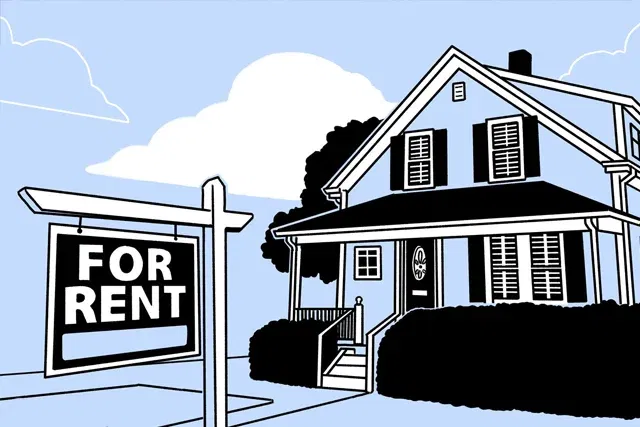
While rental apps undoubtedly simplify the process to reserve a family vacation property, they can also make it nearly too simple. After all, it just takes a few taps and swipes on an app to get a rental house. Therefore, it’s crucial to avoid a few typical errors. The following are five mistakes to avoid while renting a vacation home.
- Misunderstanding the Location
Check the location and accessibility of the attractions you want to visit in your holiday property as defined in the listing. Ask if there are any unique requirements since many rental platforms withhold the exact address until you book out of respect for your privacy.
- Judging a Place by Photos Alone
Just as you shouldn’t judge a book by its cover, you shouldn’t book a rental by its pictures. Take the time to review all the amenities the rental house has to offer, despite the temptation to make a reservation based solely on the images. Before making a reservation, it can help you manage expectations and provide information.
- Not Using a Major Platform
There have been many instances of fraud and scams involving vacation rentals, thus it is preferable to search for a reputable property management company’s website or well-known travel companies with a procedure for checking properties and hosts. Additionally, the safest method of payment is via credit card.
- Not Looking at Recent Reviews
The majority of platforms allow for two-way reviews, with hosts and guests both giving feedback on the other. The most useful source of information about how your stay will be found in community comments, particularly more recent reviews. We constantly advise visitors to check the reviews because they’ll provide the most current, relevant information to make sure their experiences live up to their expectations.
- Expecting Hotel-like Services
Know what you’re getting into when renting a vacation home because, like hotels, they differ in quality and facilities from trailers and tree huts to mansions and villas. Setting expectations for everyone is crucial because there won’t be daily housekeeping and no turndown service.
- Not Checking Out Properly
Make sure to read the house rules before checking out because they vary for every vacation rental. The owner may not need you to wash the sheets and make the bed before you depart, but they may ask you to load and run the dishwasher or put any relocated furniture back in its original location. When you check out, keep in mind that the pantry and refrigerator must be empty.
by Amit | Sep 15, 2022 | Travel Tips
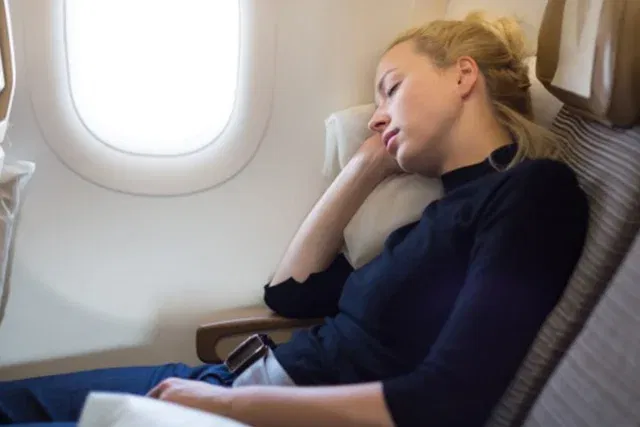
Are you traveling on lengthy flights? You may feel bored, uncomfortable, and exhausted whether you are taking a seven-hour tour to Europe or undertaking a 19-hour journey of the world’s longest flight.
The problems of long-haul travel can range in harshness from annoying seatmates to downright dangerous. An unclear planned journey can ruin your day. Fortunately, we have listed ten easy tips to bear a long flight. Read on!
- Book your Tickets Early
Without waiting and hoping for the price drop, it is better to book your tickets at the earliest. As the earlier you book the tickets, the better your chances of picking your favorite seat.
- Book Back Seat
If your favorite seat is no more available, book the back seat. However, it will be noisier, but if everyone prefers the front seat, you have a far better possibility of ending up with an empty seat or two beside you.
Furthermore, keep an eye on the seat map before you fly if there are any empty seats you can get at the last minute.
- Get Creative
So, if your flight is long hours, you get to use it as an opportunity. You can carry the notebook with you, a sketch pad, or anything else you are interested in.
- Stay Hygienic
Stay hygienic is important for everyone. So, try to carry your own toiletries and ensure to brush up your teeth, put on some deodorant, and even you can change your clothes to be hygienic.
- Bring your Best Conversation
Long flights can be very boring. So, never hesitate to start a conversation with your fellow seatmate. If you are likely to be seated next to an interesting and friendly fellow, strike up a conversation.
- Walk to Keep the Blood Flowing
Passengers who travel in pressurized cabins may have symptoms such as weariness, headaches, swelling limbs, and dehydration over time as a result of decreasing blood oxygen levels. The most ideal activity is to Stretch. To increase blood flow, walk up. You can also perform some quiet exercises in your seat, such as rolling your shoulders and turning your ankles.
- Wear the Most Comfortable Outfit
When it comes to long-haul flights, pick a “comfy-chic” dress code of neutral, loose-fitting layers you feel comfortable in. Experts also suggest wearing compression socks, which decrease swelling and reduce the risk of blood clots.
- De-stress Before you Arrive
Before you go on a long journey, it is necessary to have a nice breakfast, go to the gym, or for a walk. It is important for every traveler to feel relaxed.
- Don’t Overpack the Carry-ons
A long-haul journey will demand more of you than a short-haul flight would, but that doesn’t mean it’s too overpack. Keep your essentials in your personal item so you can always access them.
- Bring your Own Pillow
The basic carry-on item for long-distance passengers is a small pillow. Travel pillows are available almost everywhere at airports, and appearing a little foolish is a minor price to pay to avoid damaging your neck.

by Amit | Aug 24, 2022 | Ecommerce, Sports Accessories, Tips, Toys
Are you looking to travel by car through Europe? For your convenience, I`ve provided
my top advice for renting a car and driving in Europe. Nothing brings me more joy
than a road trip around Europe. You can plan your schedule, alter it at will, and travel
to off-the-beaten-path locations since using public transportation there is either
impossible or extremely difficult.
However, hiring a car in Europe may be expensive and challenging. Additionally, you
should be aware of various driving-related considerations and risks. Don't be put off
by driving in Europe; it`s not intimidating. However, it is unquestionably more difficult
than driving in the US.
List of 5 Tips for Renting a Car in Europe
The most important information about hiring a car and driving in Europe is provided
here.
1. Get Full Insurance Coverage
Collision Damage Waiver (CDW) coverage is typically included with European rental
automobiles, although this isn`t insurance. It only covers damage to the car up to
€1000 to €3000. They keep this sum on your credit card until you return the
automobile undamaged.
Book complete coverage in advance with Auto Europe to ensure you are ready for
any situation. More affordable than at the counter. Then, you won't have to be
concerned about mishaps, minor collisions, or major crashes.
2. International Driver’s License
In 150 nations worldwide, an international driving permit, or “IDL”, is recognized as
legal identification. Rules can differ from one place to another. However, if you intend
to drive in Austria, Bosnia-Herzegovina, Croatia, Greece, Hungary, Italy, Poland,
Romania, Slovenia, Slovakia, or Spain, you’ll require an IDP. The officer won’t want
to check your US license if you are pulled over.
3. European Roads and Round About
Driving in Europe is very dissimilar to driving in America. European roads,
particularly those in rural areas, are much windier. Hairpin twists and severe uphill
and downhill hills are present. It’s entirely normal not to see a painted line separating
your lane from the one used by approaching vehicles.
4. Watch out for unexpected fees
Compare rental businesses and rental costs. Finding the best prices will require
some research. Keep an eye out for additional expenses like a drop-off fee if you’re
thinking of renting a car in Europe one-way (pick up in one location, drop off in another). Planning your journey carefully will help you return the car close to where
you rented it, saving you money.
Also, be aware of any border crossing regulations. Some rental car companies won’t
let you drive their vehicle into specific European nations.
5. Age Requirements
In Europe, there are several age restrictions. Some businesses may rent to people
as young as 17 in locations like the UK, but it’s 21 and older in countries like Spain
and the Netherlands. This is not a set rule and differs from business to business.
Confirm before making your rental if you want to have a young driver.
Wrapping Up
When traveling with a family in Europe, we advise renting a car. In addition to saving
money, it also offers priceless flexibility and convenience.
by Amit | Apr 29, 2022 | Destinations, international, International Destinations, Tips, Travel Tips, vacations
Learn how to assess security concerns when traveling to more “exotic” destinations and keep safe.
Some travelers maintain that tourist travel to certain countries is unsafe and to be avoided. At the same time, other travelers insist that such travel is safe.
Who, then, can a potential traveler believe? Every traveler is different and has varying travel interests and tolerance levels for risk.
Even within the same country, security concerns may vary widely as well. Before considering travel abroad, it is important to carefully evaluate possible security concerns for a particular destination, while keeping in mind your travel style and willingness to adapt to local ways.
Official Travel Warnings
Before considering travel to a particular country or location, it is advisable to check a variety of sources. This way, the potential traveler can compare the different security concerns that are expressed about a specific country.
A major reliable source of information about the security and safety situations of countries around the world are the dedicated travel sections of government-run foreign affairs offices like the United States’ Department of State, the United Kingdom’s Foreign Office, and Australia’s Department of Foreign Affairs and Trade. All three offices offer frequently-updated country specific information, travel warnings, and travel advice on their respective websites.
As government bureaus that watch out for their citizens’ safety and interests, the Department of State, the Foreign Office, and the Department of Foreign Affairs and Trade have access to a wide range of sources in the creation of these documents. However, some critics have expressed concern that certain travel warnings may be politically motivated.
Information From Other Travelers
Other travelers can be a great source of information. They may have recently gone exactly where you are thinking of going or they may have some first-hand information that is not readily available in guidebooks. On the other hand, they may have picked up unreasonable or unwarranted opinions or prejudices. The rule of thumb when seeking the advice of other travelers is to gain as much information as possible, but to take it with a grain of salt.
Online travel forums are an easy way to find other travelers who may be eager to share their travel experiences with you. Politely asking curious questions is a good way to get the conversation started. Alternatively, you may know someone in your extended circle of contacts who has gone to the place you are researching. You may ask them to coffee so that you can pick their brains.
Mode of Travel
How one travels can impact one’s level of safety and is an important consideration to keep in mind. For example, in a country where Westerners have been known to be targets, Western tourists traveling in a large group may constitute a security concern in certain areas. Traveling as a small group may attract less attention, but as a smaller group – or even those who travel individually – tend to be more approachable, they may be more susceptible to harassment or worse from unsavory elements of the local population.
Whether traveling as a large group, a small group, or individually, it is important to anticipate and balance current security concerns in the city and country you wish to travel to with the mode of travel you choose. If in doubt, contact your country’s local embassy or consular section for advice and information about the latest conditions.
Fitting in Promotes Safety
In general, travelers who try to respect the local customs through their dress, actions, and speech have a greater chance of ensuring their personal safety. As an illustrative example, a gay couple may openly kiss on the streets of Berlin, Germany; however, that couple would risk death for the same behavior on the streets of Riyadh, Saudi Arabia. A woman who dresses modestly and a tourist who speaks the local language are appreciated in many countries, or at least it may help the traveler to draw less attention to him or himself.
In certain cases a traveler will be immediately recognizable as a foreigner or tourist, such as black people in Russia or white ones in India, or if you are unable to speak the local language, which may draw unwanted attention, but attempting to emulate local dress, actions, and speech may make a positive difference in how the traveler is perceived or treated. So, read a book on the country’s customs. Take a language course. Put together a modest wardrobe.
Keeping Safe
To be safe, it is important to assess the conditions and safety concerns in the city and country you are considering travel to. Get as much information and evaluate it as you can, you need to carefully look at it, you can make an informed travel decision and have a good holiday while avoiding a potential tragedy.